Structural Analysis of Altcoin Delisting Pressures and the Evolution of Automated Trading Systems
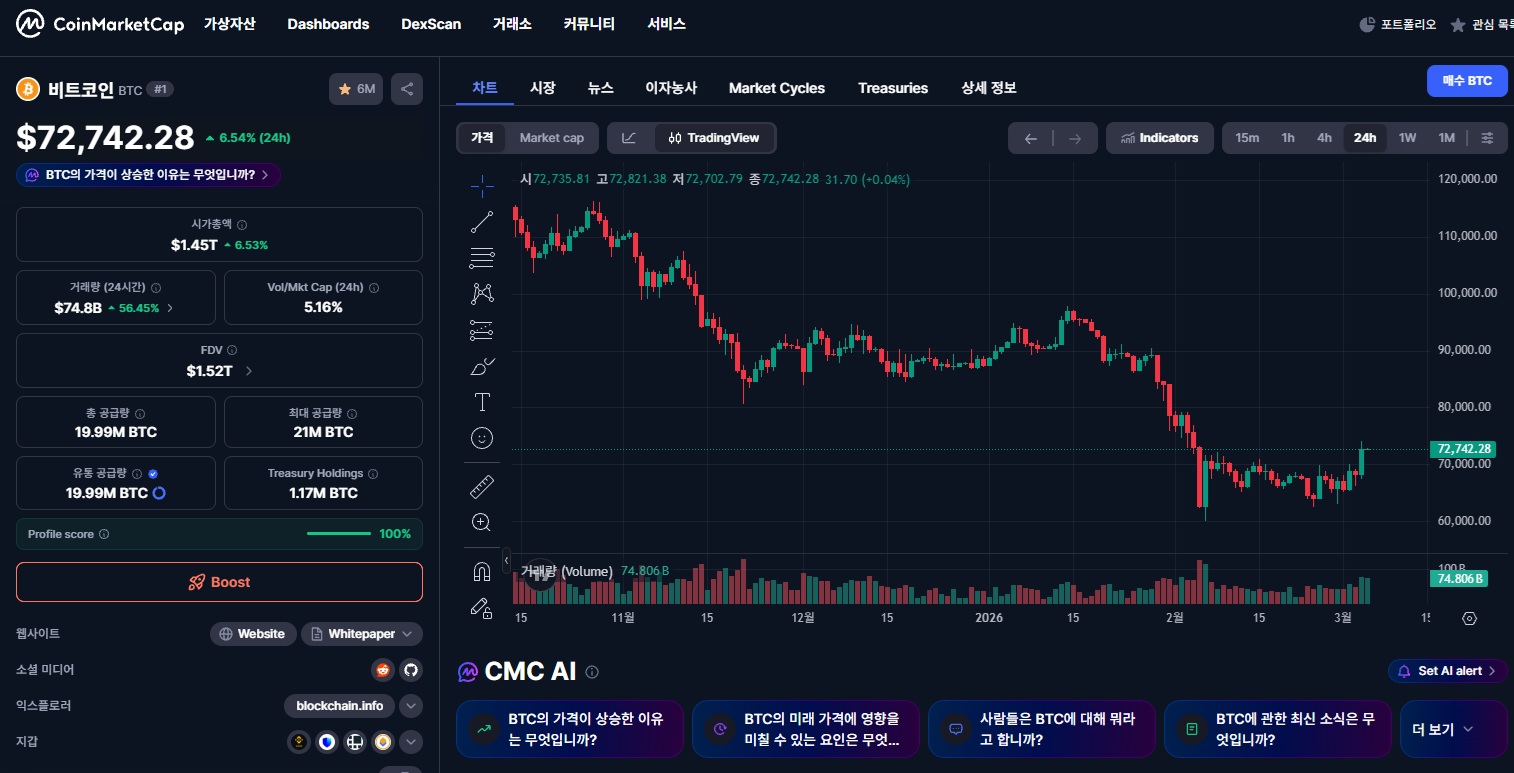
The Korea Financial Intelligence Unit's (KOFLU) recent "Virtual Asset Risk Assessment Report" for the second quarter of 2024 indicates a 23% quarter-on-quarter increase in the number of virtual asset transactions flagged for potential market disruption. Concurrently, data from CoinMarketCap shows that over 1,800 altcoins have been delisted or rendered inactive across global exchanges in the past 12 months, a figure that represents approximately 15% of the listed assets from a year prior. This is not a transient market correction; it is a systemic filtration process. The narrative of "delisting fear" transcends mere price volatility, exposing the fundamental fragility of assets lacking in liquidity, regulatory clarity, and sustainable utility. For the retail investor, this translates not to paper losses, but to the absolute, irreversible evaporation of capital—a total write-down to zero.
Delisting is rarely a singular event. It is the terminal diagnosis following a prolonged illness of deteriorating metrics. Exchanges, functioning as profit-driven private enterprises, conduct continuous cost-benefit analyses. An asset with daily trading volume persistently below $100,000 ceases to be a revenue stream and becomes an operational liability, incurring costs for maintenance, compliance, and security. The catalyst is often a regulatory shift, such as an exchange preemptively removing tokens deemed potential "securities" by jurisdictions like the U.S. SEC, or a failure to meet updated technological standards.
My own experience in developing quantitative trading systems underscores a critical, often overlooked, vulnerability: the liquidity cliff. During the 2018-2019 crypto winter, I witnessed algorithms designed for modest volatility spiral into catastrophic failure when order books evaporated. A token could show a 5% bid-ask spread one moment, and the next, the entire first 20 levels of the order book vanish, leaving a market order to fill at prices 50% below the last tick. This is the hidden risk behind the "delisting warning" notice. It is not the final delisting day that is most dangerous, but the weeks prior, where liquidity providers exit en masse, creating a trap for both manual holders and automated systems.

The promise of "0% liquidation risk" in automated trading is, in absolute terms, a mathematical mirage. Risk cannot be eliminated; it can only be transformed or managed. Advanced AI-driven quant systems confronting this environment operate on a hierarchy of survivalist principles, far removed from simple trend-following strategies.
First, liquidity becomes the paramount factor, superseding all technical indicators. Algorithms must dynamically score assets not on RSI or moving averages, but on real-time depth of book, volume concentration, and exchange health scores. A system I once architected was programmed to automatically initiate a phased exit from any position where the 24-hour volume fell below 50 times the position size, regardless of the P&L. This is a defensive, capital-preservation logic that often runs counter to the "buy the dip" instinct of human traders.

Second, multi-exchange risk dispersion is a double-edged sword. While spreading holdings across platforms mitigates exchange-specific failure risk, it introduces complex execution and withdrawal risks during market-wide stress. An algorithm must account for varying API latencies and withdrawal freeze probabilities. The collapse of the FTX exchange was a brutal lesson in counterparty risk that no backtest could fully capture; it was a systemic shock that validated the paranoid design of holding assets only on the most compliant, transparent venues, even at the cost of yield.
Third, the "kill switch" paradigm evolves. It is no longer a single price-based trigger. Modern systems integrate news sentiment analysis, regulatory announcement scraping, and social media volume anomaly detection to preemptively move to cash or stablecoins. The goal is to exit before the delisting announcement, not after. According to a recent Bank of Korea report on financial stability, contagion in crypto markets often follows a predictable pattern of social media-driven fear amplification preceding official actions by 24-72 hours.
Passivity is the greatest risk. The following action plan is derived from operational experience, not theoretical finance.
1. Conduct a Liquidity Audit Immediately: Classify every altcoin in your portfolio using a simple matrix. On one axis, plot "Project Fundamentals" (team activity, GitHub commits, utility). On the other, plot "Market Health" (24h volume > $10M, listed on at least two Tier-1 exchanges like Binance or Coinbase). Any asset failing the market health criteria, regardless of fondness for the project, should be scheduled for exit. Sentiment has no liquidity.
2. Redefine Your Stablecoin: Not all stablecoins are equal. The algorithmic stablecoin collapses of 2022 proved that. Consider a portion of your defensive holdings in money market funds or short-term government bond ETFs (accessible via many traditional brokerages) as a true risk-off asset, completely decoupled from the crypto ecosystem's systemic risks.

3. If Using Automated Tools, Implement Circuit Breakers: Configure any trading bot or algorithm with hard, non-negotiable rules: a) Full exit on exchange delisting announcement. b) Position size capped at a maximum of 5% of the asset's 30-day average volume. c) Mandatory withdrawal of profits and principal to cold storage on a weekly schedule. Automation should serve your rules, not define them.
4. Monitor the Canaries in the Coal Mine: Track the "futures funding rate" and "open interest" for smaller altcoins. A persistently negative funding rate combined with plunging open interest is a professional market signal that leveraged players are abandoning the asset, often preceding a liquidity crisis.
The market is undergoing a profound maturation, separating signal from noise with brutal efficiency. The delisting wave is not a bug but a feature of this process. Survival and success will belong not to the most speculative, but to the most disciplined—those who respect data over narrative, liquidity over hype, and who structure their strategies not for maximum gain in a bull market, but for capital preservation in a storm. The most sophisticated algorithm, in the end, must encode this fundamental principle of humility before the market's complexity.


Comments
Post a Comment