A Mathematical Deconstruction of Geopolitical Market Shocks: Beyond the Martingale Fallacy
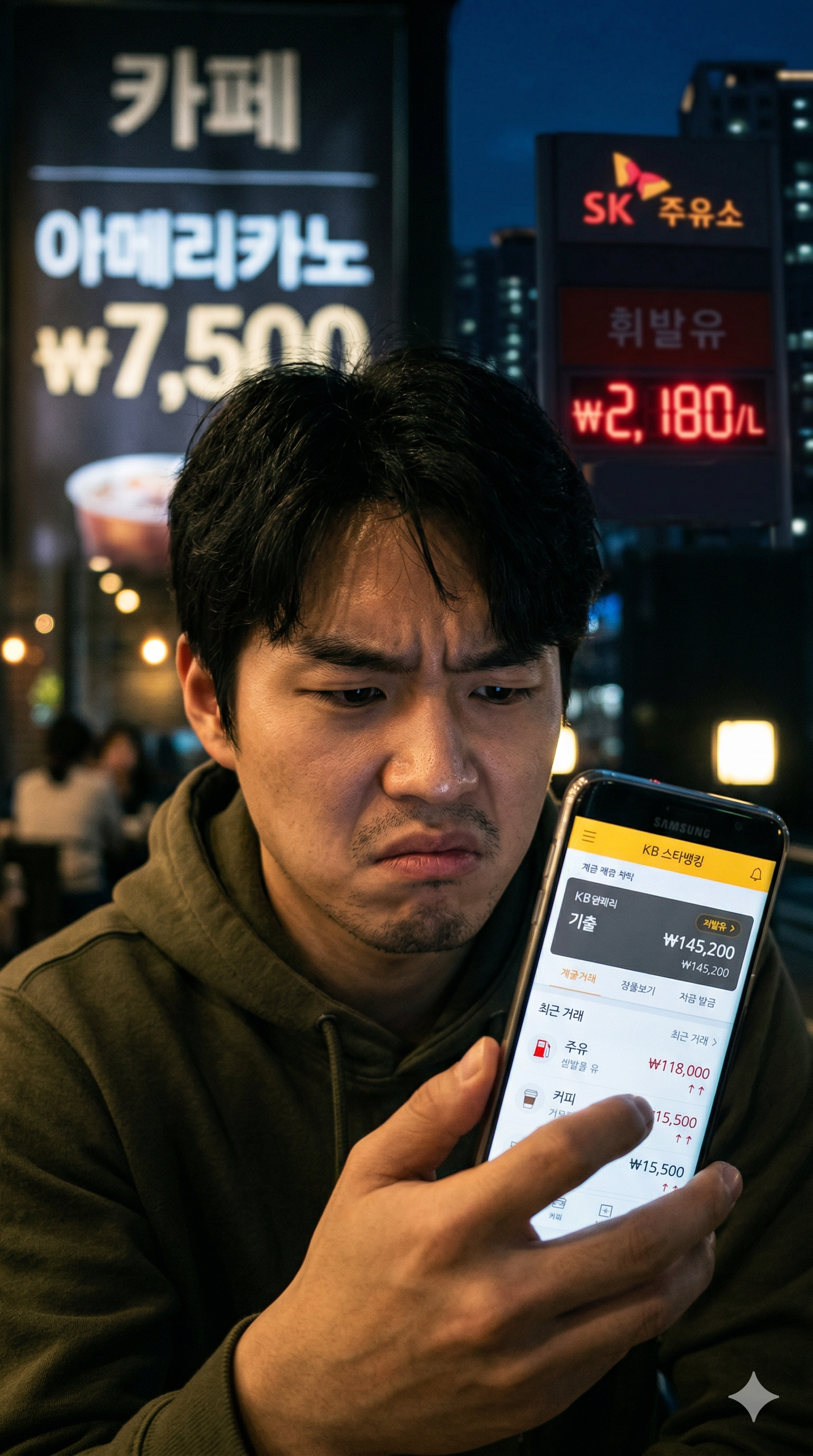
The VIX index, often termed the "fear gauge," spiked by over 40% in the immediate trading sessions following the initial reports of the Iran-Israel escalation in April 2024. Concurrently, the Korean won depreciated past the 1,380 KRW/USD threshold, a level not seen since late 2022, while the domestic Kospi index exhibited volatility exceeding 3% on a daily basis for three consecutive days. These are not mere headlines; they are quantifiable tremors transmitting through the global financial nervous system, directly impacting the valuation of domestic pension funds, individual stock portfolios, and the real purchasing power of savings. The reflexive human response to such shocks—driven by a potent cocktail of fear of missing out (FOMO) and loss aversion—often manifests in reactive, emotionally-charged trading, colloquially known as "panic buying" or "panic selling." A disturbingly common, yet mathematically bankrupt, strategy that resurfaces during these periods is a bastardized application of the Martingale system, promising a false sense of control over chaotic markets.
The Martingale system, in its pure theoretical form, is a betting strategy where after every loss, the stake is doubled. The premise is simple: an eventual win will recover all previous losses and yield a profit equal to the original bet. In the context of geopolitical trading, this translates to a retail investor repeatedly "averaging down" on a plummeting defense stock ETF after each negative news cycle, or doubling down on short positions against the Korean won, believing a reversal is inevitable.
My own scars from the 2008 Global Financial Crisis and subsequent failed ventures in import/export businesses are a testament to the seductive danger of this logic. Facing mounting inventory losses and currency mismatch, I engaged in a similar pattern of doubling down on forward contracts to hedge against a weakening won, only to be obliterated when liquidity dried up and the market moved against my position for far longer than my capital could endure. The fatal flaw is not in the arithmetic but in its foundational assumptions: infinite capital and zero transaction costs. 통계청 자료에 따르면, the median financial assets of Korean households in the top 20% income bracket are approximately 650 million KRW. This finite capital pool stands in stark contrast to the infinite requirement of a sustained Martingale sequence. A mere seven consecutive adverse moves in a market, each requiring a doubling of capital, would demand 128 times the initial position—a sum that swiftly bankrupts any individual or institution lacking the balance sheet of a central bank.
The superficial narrative focuses on "risk-off" or "flight to safety." The professional's concern lies in the mechanical breakdown of market structure. Geopolitical events of this magnitude trigger a cascade of second and third-order effects that the Martingale gambler completely ignores.
First, Liquidity Fragmentation. As uncertainty peaks, market makers widen bid-ask spreads dramatically. An asset you could previously sell at a 0.1% spread may now carry a 2% cost to exit. This invisible friction consumes capital far faster than any direct price move. 최근 한국은행 금융안정보고서를 보면, it highlighted the increased sensitivity of domestic foreign exchange market liquidity to global volatility indices, noting that "market depth can evaporate rapidly during stress events, exacerbating price moves."
Second, Correlation Breakdown. In calm markets, assets exhibit stable correlations. During a crisis, these correlations often converge to 1.0 or -1.0 unpredictably. A portfolio constructed to be "diversified" across Korean semiconductors, European luxury goods, and crude oil may suddenly see all components move in lockstep downward as the sole driver becomes systemic risk aversion. Your Martingale bet on one asset class becomes a de facto bet on the entire global risk apparatus failing simultaneously.

Third, Regime Change. This is the most critical concept. Markets operate in different "regimes"—periods of low volatility, high growth, stagflation, or crisis. A geopolitical shock often forces a transition from one regime to another. The historical data and patterns from the previous regime (e.g., the low-volatility, liquidity-abundant 2010s) become worthless. The parameters of your Martingale model, calibrated on old data, are now obsolete. The system you believe is mean-reverting may have entered a new, trending regime with no clear endpoint.
The alternative to emotional Martingale gambling is not inaction; it is the disciplined engineering of a portfolio resilient to regime change. This plan is actionable before the next headline hits.
1. Stress-Test with Specific Scenarios, Not Percentages: Do not ask, "What if the market drops 10%?" Instead, model: "What if the USD/KRW rate sustains at 1,450 for a quarter while the 3-year corporate bond yield rises 150 basis points and my equity portfolio's beta-adjusted drawdown is 25%?" Use this scenario to calculate the impact on your margin requirements, debt servicing costs, and overall net worth. Adjust your leverage and asset allocation until the outcome is non-fatal.
2. Implement Non-Correlated Hedges with Defined Cost: Replace the infinite-loss potential of a Martingale with instruments that have a defined, maximum cost.
- For Equity Portfolios: Purchase out-of-the-money put options on a broad index (like the KOSPI 200) for a portion of your portfolio. The premium paid is your maximum loss (the "insurance cost"), while the protection is active. This is capital-efficient and psychologically liberating.
- For Currency Exposure: If you have overseas assets or liabilities, use simple forward contracts to lock in a rate for known future needs. For uncertain exposures, consider currency options. This eliminates speculation and focuses on financial planning.
3. Build a "Strategic Dry Powder" Protocol: Automate your liquidity management. 통계청 자료에 따르면, the household debt-to-disposable income ratio remains elevated. Discipline is key. Rule: Any investment gains above your annual target are automatically swept into a tier of highly liquid, low-correlation assets (e.g., short-term government bonds, treasury money market funds). This is not "cash waiting to deploy" on a dip; it is a permanent strategic reserve that is only touched when your pre-defined stress-test scenario is triggered. It provides endurance without the compulsion to "double down" prematurely.

4. Conduct a Portfolio "Liquidity Audit": Categorize every holding not by its expected return, but by the speed and cost at which it can be converted to cash during a crisis. Illiquid assets (certain real estate, private equity, low-volume bonds) are not bad, but they must be funded by permanent capital, not short-term leverage. Ensure your liquid assets can cover 12-24 months of expected outflows and margin calls under your stress scenario.
Geopolitical shocks are not anomalies; they are recurring features of the financial landscape. The difference between those who are crippled by them and those who navigate them lies in the abandonment of magical thinking and the embrace of probabilistic, capital-preserving rigor. The Martingale system is a siren song promising order in chaos, but it is a recipe for ruin. True resilience is built not on doubling down, but on planning for what can go wrong, defining your risks, and paying a known, acceptable price for that protection. In the mathematics of survival, expected value and terminal wealth calculations always trump the desperate hope for a single, miraculous mean reversion.


Comments
Post a Comment