A Mathematical and Strategic Analysis of Market Liquidity Extraction Patterns and Countermeasures in Volatile Assets

The recent wave of delisting announcements for low-capacity alternative cryptocurrencies has triggered a specific type of market panic. This phenomenon is not merely about the disappearance of a few obscure trading pairs. It represents a systemic stress test on market microstructure, where the fear of a liquidity event (delisting) is exploited to execute a calculated extraction of capital from retail participants. Data from the Financial Supervisory Service's market reports in Q4 2023 indicates that trading volume for small-cap altcoins on domestic exchanges can evaporate by over 70% in the week following a delisting notice, creating a predictable and mathematically exploitable price trajectory.
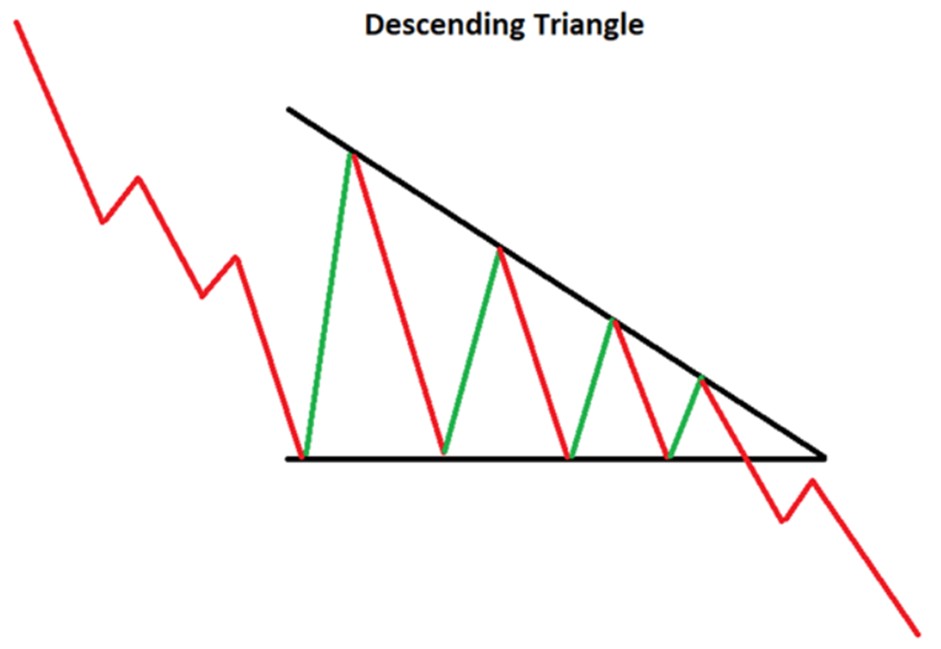
The process follows a distinct, almost algorithmic pattern. First, an official delisting notice is issued, typically providing a 1-2 week grace period before trading cessation. This announcement acts as a forced liquidation catalyst. The initial reaction is a precipitous drop, often 50-80%, as automated sell orders and panic-stricken retail holders rush for the exit. However, the price rarely moves in a straight line to zero. A critical phase follows: the "dead cat bounce" or liquidity squeeze. As sell orders are exhausted, the order book becomes dangerously thin. A small amount of capital can then engineer a sharp, double-digit percentage rebound. This rebound is not a recovery; it is a trap. It lures in two types of players: desperate bag-holders averaging down using Martingale-like strategies, and speculative traders misinterpreting the bounce as a buying opportunity. Once sufficient buy-side liquidity is pooled, the final, decisive sell-off occurs, draining the remaining capital before the asset is rendered untradeable.
This mirrors the dynamics I witnessed during the 2008-2009 credit crunch in small-business commercial real estate. When a regional bank signaled it would not renew loans for a specific asset class, it didn't immediately foreclose. It created a window where desperate owners sought refinancing, often injecting more personal capital (averaging down) to meet new, stringent conditions, only for the bank to ultimately pull the plug, consolidating and liquidating the assets at a steeper discount. The mechanism of exploiting a known terminal event to maximize extraction is a cross-market constant.
The most perilous individual response to this pattern is the unthinking application of a Martingale strategy. The classic Martingale, borrowed from probability theory, involves doubling one's position after a loss, with the belief that a single win will recoup all previous losses. In the context of a delisting death spiral, this is a catastrophic miscalculation. The core assumption of Martingale—that outcomes are independent and identically distributed (like coin flips)—completely collapses. Here, each price drop is *not* an independent event; it is a direct consequence of a known, terminal liquidity shock. The "game" has a definitive end date and a near-certain final outcome (price near zero).
From my quant development days, the critical lesson was that any trading system must account for regime change—a fundamental shift in market rules. A delisting announcement is the ultimate regime change. Continuing to apply a mean-reversion or averaging-down logic in such a regime is mathematically bankrupt. The risk of ruin approaches 100%. Your capital is finite; the market's ability to absorb your doubling bets in an illiquid, one-sided order book is virtually zero. You are not betting against random volatility; you are betting against a countdown clock managed by entities with superior information and capital control.
The greater risk for a diversified portfolio holder is not direct exposure to the delisted asset itself, but the hidden gamma risk and contagion. When a significant number of retail traders face catastrophic losses in one segment, it often triggers forced liquidations in other, unrelated holdings to cover margins or personal financial shortfalls. This creates selling pressure in otherwise healthy assets. Furthermore, according to recent analyses in the Bank of Korea's Financial Stability Report, high retail concentration in speculative assets increases cross-asset correlation during stress events, reducing the diversification benefits of a portfolio.
This is akin to a small business owner (myself included, in the past) having multiple lines of credit. The failure of one venture often does not remain isolated; banks reassess overall credit risk, potentially calling in loans or denying credit for other, profitable ventures, leading to a unnecessary broad-based contraction. The delisting of Altcoin A can thus depress the price of Altcoin B and C through this liquidity contagion channel.
Passive observation is not a strategy. The following are concrete, executable actions to be implemented *before* such an event touches your portfolio.
1. Pre-emptive Triage and Exposure Limit: Immediately conduct a portfolio audit. Any asset with a market capitalization below a certain threshold (e.g., top 100 by global liquidity) or trading primarily on a single, non-top-tier exchange should be categorized as "high liquidity risk." Set a hard cap for total exposure to this category—for instance, no more than 5% of total risk capital. This is not about predicting winners; it is about limiting the damage from a single, predictable failure mode.
2. Implement a "Delisting Notice Protocol": Treat any official delisting notice as an immediate, unconditional sell signal. Do not wait for a bounce; do not attempt to "scalp" the volatility. The first 30-minute drop typically captures 40-60% of the total downward move. Accepting this loss is the cost of insurance against total loss. Use limit orders to exit in slices as liquidity allows, not market orders that guarantee the worst price.
3. Repurpose the Mathematics: From Martingale to Kelly: Abandon the ruinous Martingale mindset. Instead, consider the Kelly Criterion framework for position sizing in normal volatility regimes, which balances growth with survival. More critically, develop "circuit breaker" rules for yourself: e.g., "If any single position drops 25% from entry, I will reduce the position by 50% and reassess the fundamental thesis." This contains losses before they become existential.

4. Diversify Across Liquidity Tiers: Structure your portfolio in liquidity tiers. Core holdings (e.g., 70%) in high-liquidity, multi-market assets. Satellite holdings (e.g., 25%) in established but volatile sectors. Speculative "option" holdings (e.g., 5%) in the high-risk, low-cap space. This ensures that a wipeout in the 5% bucket cannot trigger margin calls or forced selling in the 70% core. This structural discipline is what separates a portfolio from a collection of bets.
The market does not reward bravery in the face of a known terminal event; it punishes it with mathematical certainty. The goal is not to outsmart the extraction pattern at its peak, but to structure your financial affairs so that its occurrence is a manageable incident, not a catastrophic event. In an environment where, as Statistics Korea data shows, household debt-to-disposable income ratios remain elevated, adding uncompensated, mathematically unsound risk to one's balance sheet is not investing—it is financial Russian roulette.



Comments
Post a Comment